 Digital Life
 › Guide
How the Ecosystem Simulator Works — Evolution Explained
Digital Life is not an animation. Every creature follows the same small set of explicit rules, and everything you see — booms, crashes, new groups, extinctions — emerges from those rules plus random numbers from a seeded generator. This guide explains each rule and how to use the simulator to explore evolution.
1. Energy: the currency of life
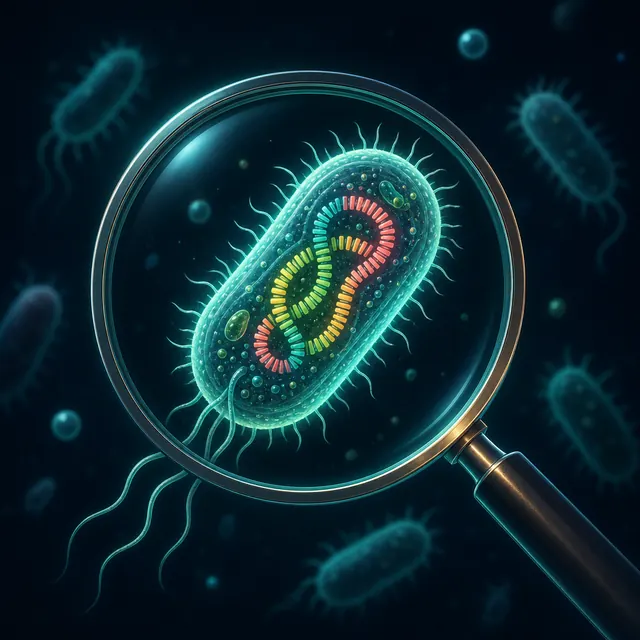
Each creature has an energy store. Moving, sensing and simply staying alive cost energy every tick; bigger bodies and faster speeds cost more. Eating plants or prey refills it. When energy reaches zero, or a creature becomes too old, it dies and leaves nutrients behind. Because energy is limited, every trait is a trade-off: speed helps you reach food first but burns energy faster.
2. Genes and inheritance
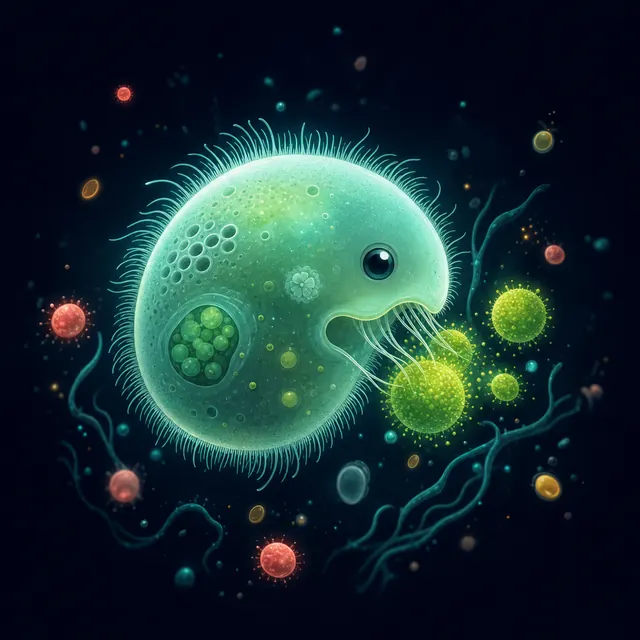
A creature's body and behaviour come from about a dozen numeric genes: speed, vision range, metabolism, digestive efficiency, body size, aggression, reproduction threshold, turning rate, risk aversion, diet (plant to meat) and preferred temperature, plus a neutral colour gene. When a creature stores enough energy it reproduces and passes its genes on — copied from one parent, or mixed from two parents in two-parent mode.
3. Mutation creates variation
When genes are copied, each one has a small chance to change by a random amount (mutation rate and strength are settings). Most changes are neutral or harmful; a few happen to suit the current world better. Without mutation the population can only reshuffle what it already has; with too much, useful traits are scrambled before they can spread.
4. Natural selection, step by step
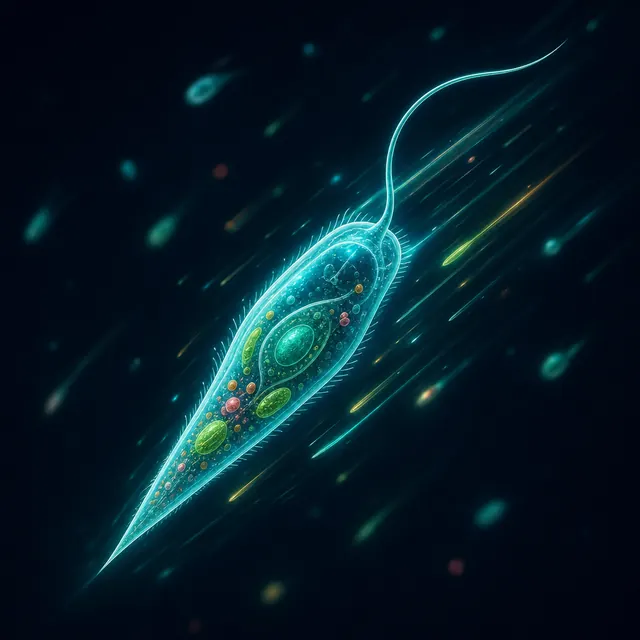
Creatures whose genes fit the current conditions find more food, survive longer and leave more offspring, so their genes become more common over generations. Nothing in the code says "get faster" or "get colder-hardy" — the averages shift only because of who survives and reproduces. Watch the gene graphs in the stats dock: when you lower the temperature, the average preferred temperature drifts down over many generations.
5. Groups and the tree of life
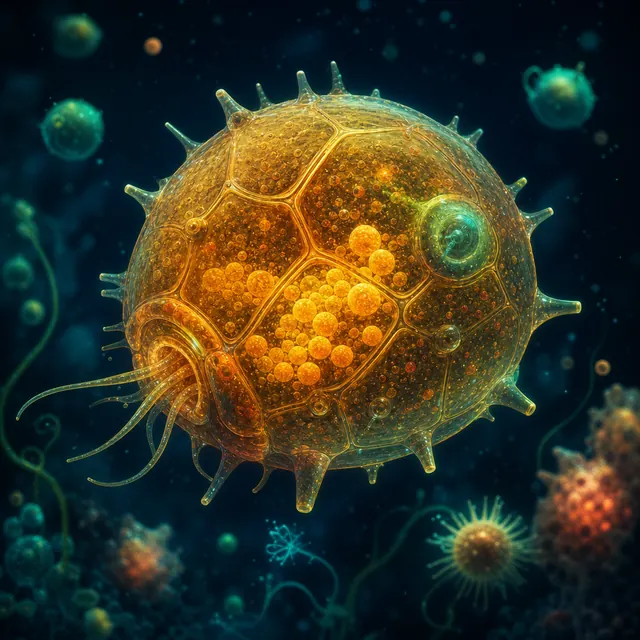
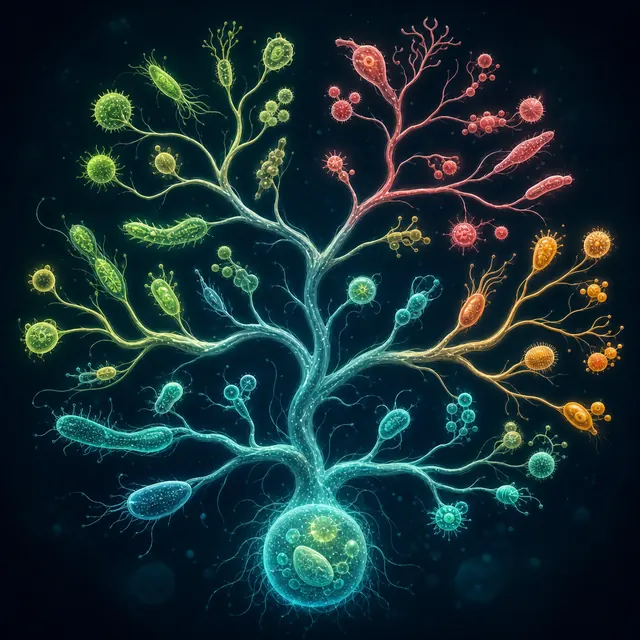
Creatures are grouped by genetic similarity. When a lineage drifts far enough from every existing group, a new group is founded — a simple heuristic, not the biological species concept. The Tree of life in the Codex shows when each group appeared, which group it branched from and when it went extinct.
6. Predators, prey and food webs
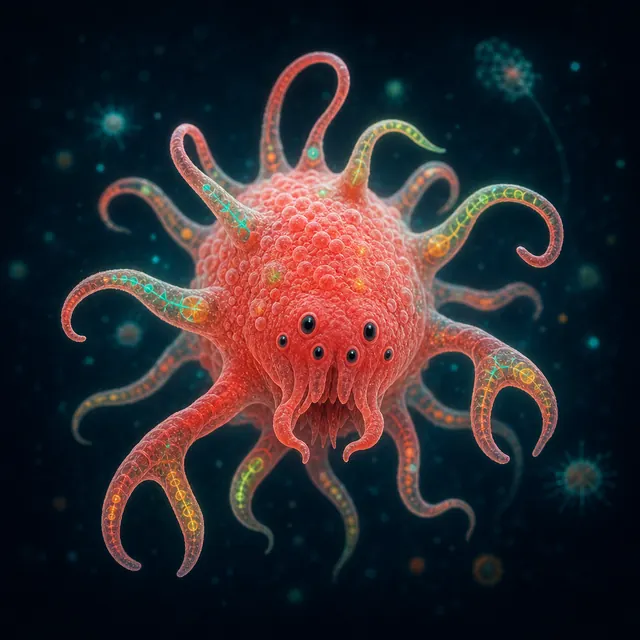
With predation on, creatures with a meat-leaning diet and enough aggression can hunt smaller or weaker creatures. Predator numbers follow prey numbers with a delay, which produces the classic boom-and-bust cycles of population ecology. Too many predators can eat their own food supply and collapse.
7. Climate, seasons and disasters
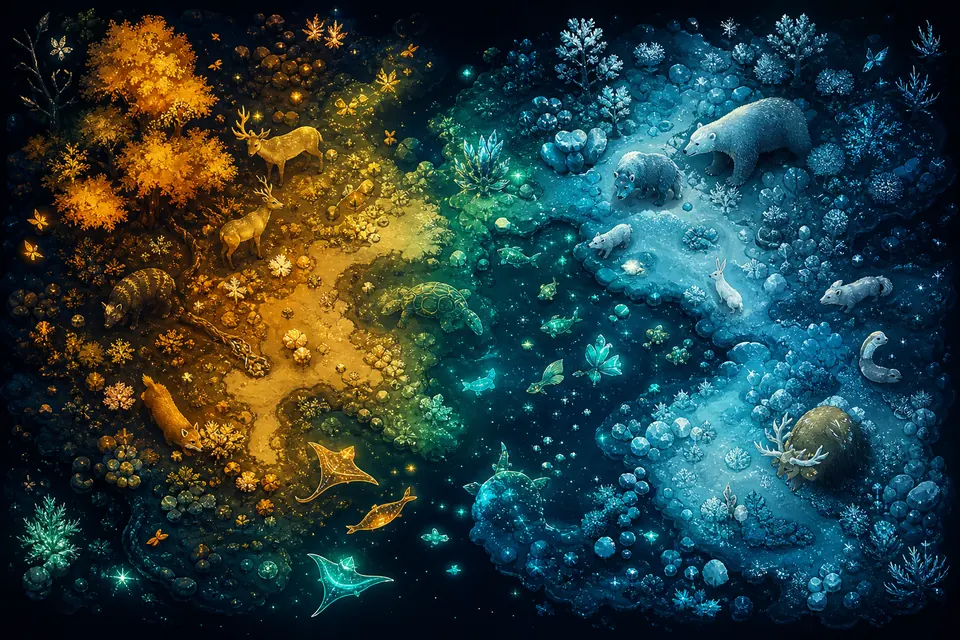
Temperature varies across the map and through seasons; creatures far from their preferred temperature pay extra energy. Disasters — drought, cold snap, heatwave, wildfire, plague and bloom — change the rules for a while. They are selection events: the survivors are not "better" in general, only better suited to what just happened.
8. Five experiments for class or curiosity
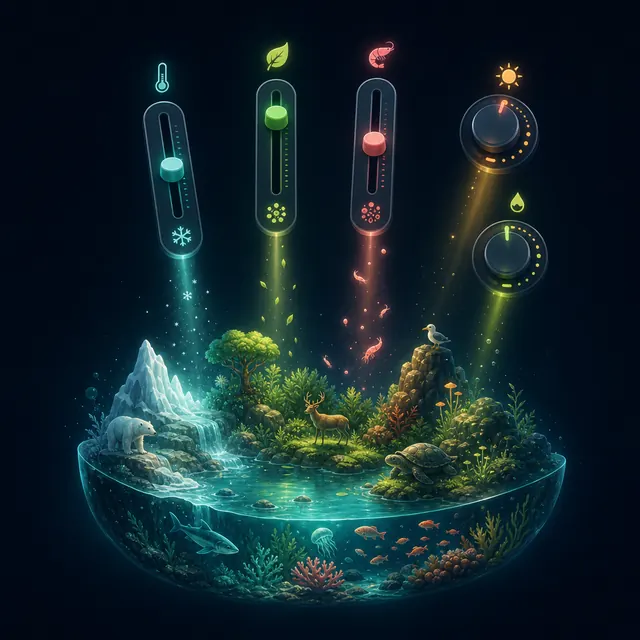
1) Same seed, different mutation rates: compare how fast genes change. 2) Lower the temperature step by step and record the average thermal optimum each generation. 3) Turn predation on and plot predator and prey counts to see delayed cycles. 4) Use "islands" food distribution and watch separate groups form. 5) Trigger a plague in a crowded world and in a sparse one — density changes the outcome. Save each run or share its link so others can repeat it exactly.
Digital Life is an abstract model for learning and play. It simplifies biology on purpose and is not a scientific prediction tool.